
Apple Mail Privacy Protection, Five Years In: What Actually Changed for Senders
It's been almost five years. When Apple announced Mail Privacy Protection at WWDC in June 2021 and shipped it with iOS 15 that September, the email industry reacted with something between panic and grief. The open rate — the metric half of our dashboards, automations, and "engaged segment" definitions were built on — was about to become unreliable overnight. Think pieces were written. Webinars were held. A lot of people predicted the death of open-rate-based everything.
Nearly five years on, we have enough distance to ask the more useful question: what actually happened? Not the panic, not the predictions — the real, settled state of open rates, engagement signals, and sender behavior in 2026. This is that retrospective. If you run lifecycle, retention, or deliverability programs, this is the honest accounting of what MPP changed, which workarounds stuck, and what "a real open" even means now.
A Quick Refresher: What MPP Actually Does
Mail Privacy Protection is a setting in Apple Mail — on by default-prompt — that does two things when a message arrives for a user who has it enabled. First, it preloads remote content (including your tracking pixel) through Apple's proxy servers, regardless of whether the user ever opens the message. Second, it routes that fetch through a proxy that masks the user's IP address, so you can't derive their location or link the open to their other activity.
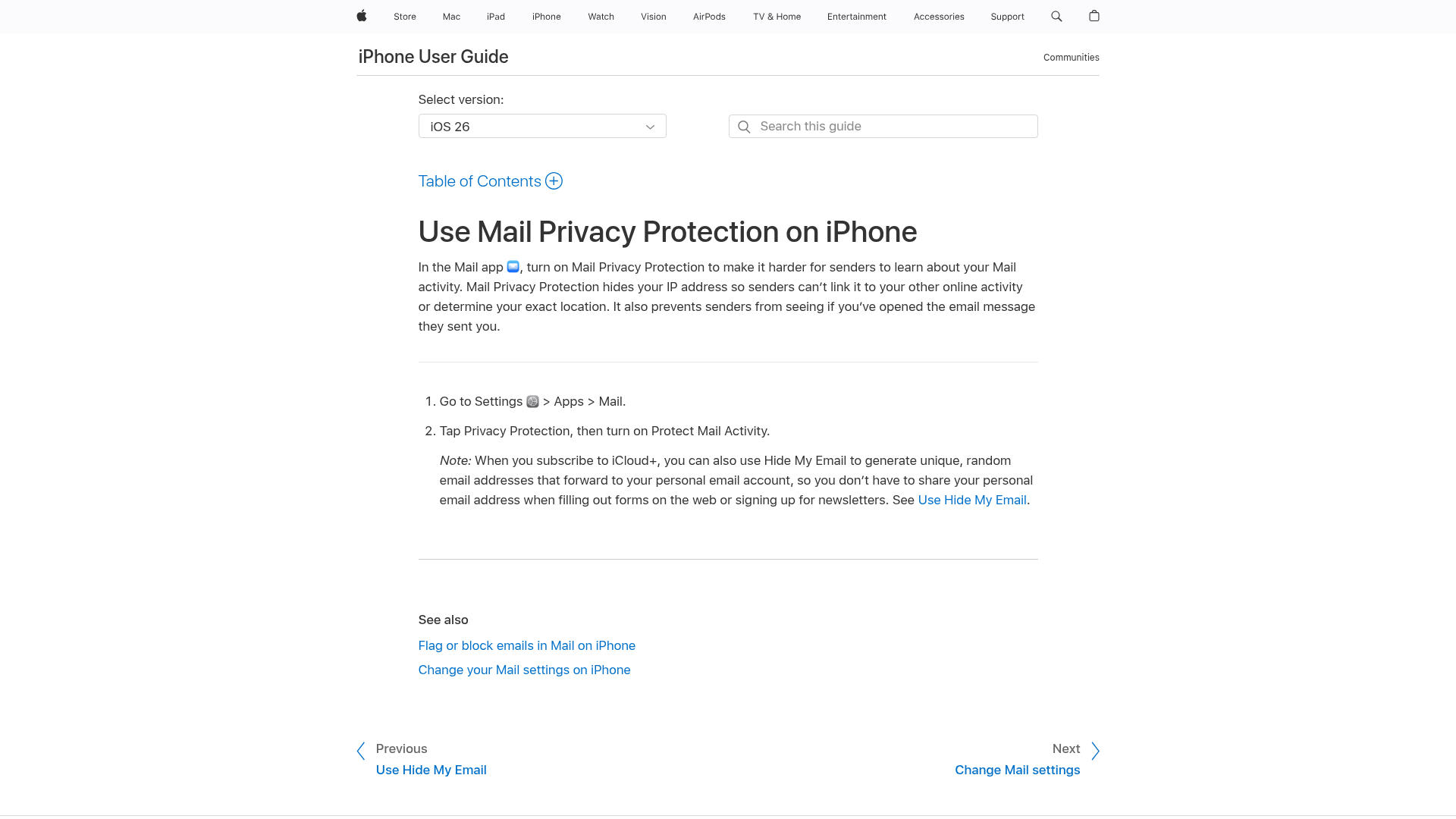
The consequence for senders is the one everyone fixated on in 2021: an "open" from an MPP-protected recipient tells you almost nothing. The pixel fired because Apple's infrastructure pre-fetched it, often within minutes of delivery, frequently in the middle of the night, whether or not the recipient ever looked at the message. The open event is real in the technical sense — a request hit your server — but it's decoupled from human behavior.
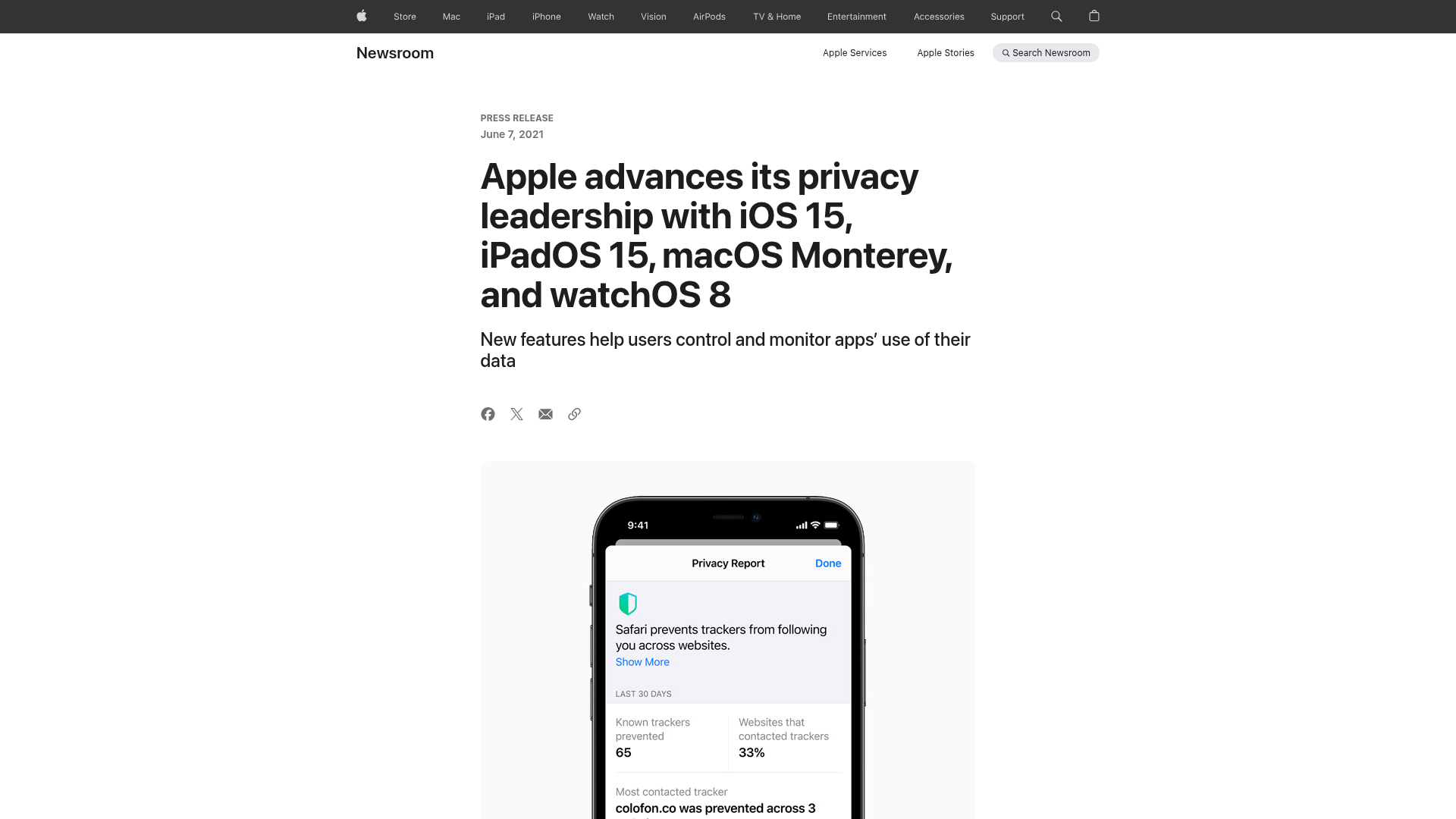
MPP was framed as one piece of a broader privacy push. The same iOS 15 announcement bundled it with App Tracking Transparency follow-ons, iCloud Private Relay, and Hide My Email — Apple's consistent positioning that tracking should be opt-in and identity should be the user's to share.
Change #1: Open Rates Are Permanently Inflated — and Everyone Knows It
The first and most durable change: aggregate open rates jumped, and they never came back down. Once Apple's proxy started pre-fetching pixels for a large share of recipients, those automatic fetches got counted as opens. Reported open rates across the industry rose by anywhere from a handful of points to more than double for Apple-heavy lists, depending on audience mix.
The number that matters here is how much of your list is on Apple Mail, because that's the slice of your "opens" that's now mostly machine-generated. And that slice is large. According to Litmus's ongoing email client market share tracking — calculated from over a billion opens a month — Apple Mail (across iPhone, iPad, and Mac) has been the dominant email environment for years, consistently sitting at or near the top of the rankings well ahead of Gmail.

The practical reality in 2026: aggregate open rate is a vanity number for most senders. It's not zero-value — a sudden drop in opens can still flag a deliverability problem, because if Apple's proxy stops fetching your pixels, something is routing you to spam or blocking your images. But the absolute level is meaningless for comparison across audiences, and open-rate "lift" from a subject-line test is now mostly noise unless you've carefully isolated non-Apple recipients.
Change #2: The Workarounds Sorted Themselves Out
In 2021–2022 every ESP and consultancy published an "MPP survival guide," and they all proposed roughly the same menu of workarounds. Five years later we can grade them. Here's what stuck and what didn't.
What stuck: clicks as the primary engagement signal
The single biggest behavioral change is that mature programs migrated their definition of "engaged" from opens to clicks (and downstream conversions). Clicks still require a genuine human action — Apple's proxy doesn't click your links — so they survived MPP intact. Re-engagement campaigns, sunset policies, and "active subscriber" segments were rebuilt around click and conversion recency rather than open recency. This is now table stakes; if your sunset flow still keys off "hasn't opened in 90 days," you're sunsetting a lot of engaged Apple users who simply never trip your pixel honestly.
What stuck: segmenting Apple MPP opens out of your metrics
The other durable workaround is detection. MPP opens have a recognizable fingerprint — they come from Apple's proxy IP ranges, fire suspiciously fast after send, and often arrive in tight clusters. Most serious ESPs now classify opens as "machine" vs. "likely human" and let you report on them separately. The good ones surface a clean human-open estimate. If your platform doesn't, you're flying with a contaminated number.
What faded: panic about "the death of the open"
The apocalyptic framing didn't survive contact with reality. Opens didn't die; they got noisier. Senders who had a balanced measurement strategy — clicks, conversions, revenue per recipient, list growth, complaint rate, inbox placement — barely flinched, because opens were never their only signal. The teams that struggled were the ones who had quietly let "open rate" become a proxy for the entire health of their program.
What faded: trying to "beat" the proxy
A few vendors floated clever tricks to distinguish real opens from proxy fetches via timing heuristics, unique-pixel-per-recipient gymnastics, or fingerprinting the fetch. These mostly haven't held up. Apple has continued to refine the proxy behavior, and chasing it is a losing arms race against a company that has no incentive to let you win. The mainstream consensus by 2026 is: don't fight the proxy, change what you measure.
Change #3: Deliverability Fundamentals Got More Important, Not Less
Here's an underappreciated second-order effect. When opens became unreliable as an engagement signal, mailbox providers' own internal signals — which we can't see — became relatively more important to deliverability. Gmail, Outlook, Yahoo, and Apple were never relying on your tracking pixel to decide inbox placement; they use their own engagement data (genuine opens, replies, "not spam" marks, deletes-without-reading, time-in-inbox). MPP didn't touch any of that.
So the providers' bar didn't move, but our ability to approximate their view using opens degraded. That made the unglamorous fundamentals — authentication, list hygiene, sending reputation — the load-bearing parts of a deliverability program. If you can't trust opens, you lean harder on the things you can control and verify.
That's also why the 2024 Gmail and Yahoo bulk-sender requirements, and the authentication tightening that followed, landed on an industry that was already primed to take authentication seriously. If you haven't revisited the basics recently, our explainer on SPF, DKIM, and DMARC is the place to start, and the forthcoming DKIM2 upgrade is worth understanding now rather than scrambling later. Authentication is the part of your reputation you fully control — in a post-MPP world, control is scarce and valuable.
Change #4: The Measurement Stack Matured
Vendors and in-house teams spent the last few years rebuilding measurement around signals that survive MPP. The State of Email research that deliverability and lifecycle teams lean on now treats "open rate" with explicit caveats rather than as a headline metric.

The concrete shape of a 2026 measurement stack for an Apple-heavy list looks like this:
- Clicks and click-to-conversion as the primary engagement KPI. Human-driven, MPP-immune, tied to revenue.
- Human-open estimate (proxy opens filtered out) used as a directional secondary signal and a deliverability smoke alarm, never as a primary success metric.
- Revenue per recipient / per email as the business-level scoreboard, which never cared about pixels in the first place.
- List health metrics — complaint rate, spam-trap hits, bounce rate, unsubscribe rate, inbox placement from seed testing — as the deliverability dashboard.
- Inbox placement and reputation monitoring from a dedicated tool, since you can no longer infer placement from a clean open-rate trend.
What "A Real Open vs. an MPP Open" Looks Like in 2026
Let's be concrete about the state of the art. For a typical consumer list today, a large share of recorded opens are machine-generated proxy fetches. The exact ratio depends entirely on your Apple Mail penetration — a B2C lifestyle brand with a young, iPhone-heavy audience might see the majority of opens come from MPP, while a B2B list dominated by Outlook-on-Windows recipients sees relatively few.
The honest 2026 framing is that you should stop thinking about it as "real opens vs. fake opens" and start thinking about it as two different measurements:
- Proxy opens tell you the message was delivered, accepted, and your remote content wasn't blocked. That's a deliverability signal, and a useful one — if proxy opens collapse, investigate placement immediately.
- Human opens (estimated) tell you something closer to attention, but with meaningful error bars. Use them for trend, not for precision, and never for the kind of single-digit A/B-test conclusions people used to draw from open rate.
Neither of these is "the open rate" of 2020. That metric is gone, and the sooner a program internalizes that, the healthier its decision-making.
Where This Connects to the Next Wave: AI in the Inbox
MPP was the first big shock to email measurement, but it won't be the last layer that sits between you and your subscriber. The same dynamic — an intermediary acting on the recipient's behalf, obscuring or transforming what the human actually sees and does — is now arriving via AI. Gmail's AI features and the broader move toward AI-summarized, AI-triaged inboxes mean even more of the gap between "delivered" and "perceived by a human" is mediated by software you don't control. We covered this shift in detail in our Google I/O 2026 AI Inbox writeup, and the strategic lesson is identical to the MPP lesson: when an intermediary changes what "engagement" means, you adapt your measurement rather than wishing the intermediary away.
If MPP taught the industry one transferable skill, it's resilience to exactly this kind of disruption. The programs that handled MPP gracefully — diversified signals, click-and-conversion-centric, authentication-solid — are the same ones best positioned for the AI-inbox era.
A Practical 2026 Checklist for Senders
If you want to pressure-test your own program against five years of MPP reality, run through this:
- Audit every automation that triggers on opens. Re-engagement, sunset, lead scoring, "engaged segment" definitions. Anything keyed on opens is keyed on noise for your Apple recipients. Migrate to clicks, conversions, or a filtered human-open estimate.
- Confirm your ESP separates machine opens from likely-human opens. If it doesn't, your reported open rate is contaminated and you should stop quoting it in QBRs.
- Make clicks and conversions your primary engagement KPI. If your dashboards still lead with open rate, reorder them.
- Treat a sudden open-rate drop as a deliverability alarm, not an engagement story. A collapse in proxy opens often means image blocking or a spam-folder placement issue.
- Lock down authentication. SPF, DKIM, DMARC alignment, and a path toward DKIM2. This is the controllable part of reputation.
- Add inbox placement monitoring via seed lists or a dedicated tool, since you can no longer read placement off a clean open trend.
- Don't try to defeat the proxy. It's a losing arms race. Change what you measure instead.
- Test what subscribers actually see. Whether your remote content even loads through Apple's proxy depends on your HTML rendering correctly. Our guide on testing HTML emails before sending still applies — and tools like Postdrop.io let you preview across Apple Mail and every other major client before you send.
Bottom Line
Five years in, the verdict on Apple Mail Privacy Protection is anticlimactic in the best way: the sky didn't fall, but the rules genuinely changed and they're not changing back. Open rates are permanently inflated and decoupled from human behavior. Apple Mail's dominance means this affects almost everyone. The workarounds that stuck were the boring, durable ones — measure clicks, filter machine opens, lean on authentication and list hygiene. The clever proxy-beating tricks faded, and the panic faded with them.
The senders who came through this best are the ones who treated MPP not as a metrics problem to patch but as a signal that single-metric thinking was always fragile. That's the real lesson, and it's the one to carry into the next disruption — because in a world of privacy proxies and AI inboxes, there will always be a next one.
References: Apple's Mail Privacy Protection user guide, Apple's June 2021 iOS 15 privacy announcement, Litmus email client market share, and the Litmus State of Email report. Internal: our guides on SPF, DKIM, and DMARC, the DKIM2 authentication upgrade, the Google I/O 2026 AI Inbox shift, and testing HTML emails before sending.