
The Best Email Platforms for Mobile App Developers (and When to Use Each)
Most email platform comparisons are written for newsletter creators: who has the prettiest editor, the best recommendation network, the most generous free tier. Useful — but if you're a mobile app developer, it's answering the wrong question. Your email isn't a publication; it's a product surface. You need messages triggered by in-app events, segmentation on user properties your app already tracks, an SDK that doesn't fight your build, and — critically — email that coordinates with push notifications and in-app messages instead of living in a separate silo with a separate user model.
In this comparison we look at six platforms through that app-developer lens: OneSignal (the omnichannel messaging platform built for apps), Resend (the developer-first email API), Amazon SES and SendGrid (the raw sending infrastructure veterans), beehiiv (the newsletter growth engine), and Kit (the creator marketing platform, formerly ConvertKit). All six are excellent at what they were designed for — the trick is knowing which design matches your product. And whichever you choose, the HTML you load into it still needs a rendering pass first; our guide to testing HTML emails before sending and the testing-tool comparison cover that side of the workflow.
What App Developers Actually Need From an Email Platform
- Event-triggered messaging. "User completed onboarding," "trial expires in 3 days," "cart abandoned" — your campaigns key off product events, not an editorial calendar.
- A unified user model. The same user has a device token, an email address, and maybe a phone number. If your email tool can't see the user your app sees, every campaign starts with a data-sync project.
- SDKs and a real API. You'll integrate from Swift, Kotlin, React Native, or Flutter — not from a marketing dashboard.
- Channel orchestration. Push for the time-sensitive nudge, email for the receipt and the digest, in-app for the upsell. Sending all three from one journey beats stitching three tools together.
- Pricing that follows your growth curve. App user bases grow faster than newsletter lists; per-subscriber pricing designed for creators gets expensive quickly at app scale.
OneSignal: Built for Apps First
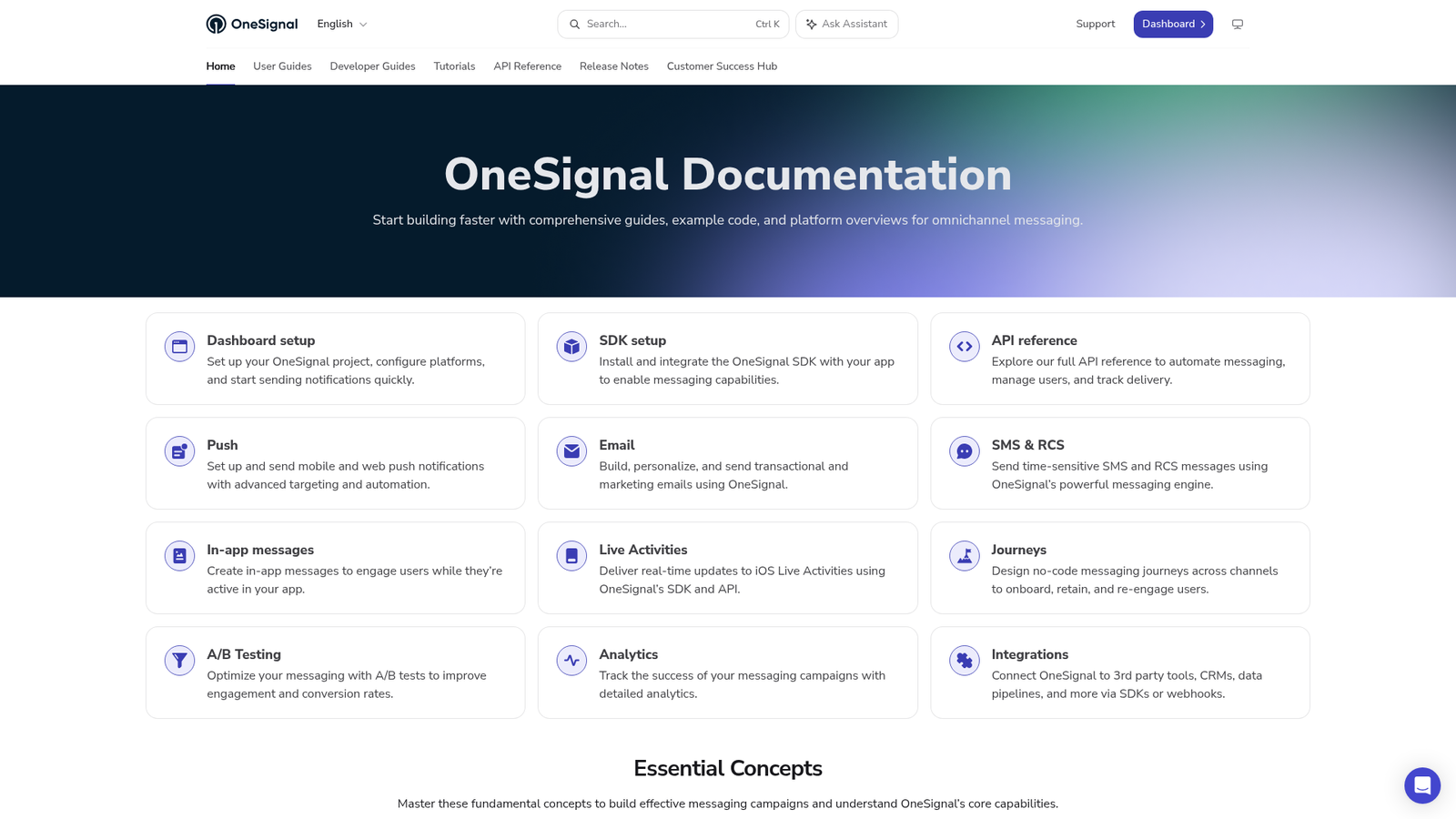
OneSignal started as the default push-notification service for mobile apps — it powers push for over a million apps — and has grown into a full omnichannel messaging platform: push, email, SMS, in-app messages, and iOS Live Activities, all driven from one user model and one API. That origin story is exactly why it fits app teams so well: it treats email as one channel in your product's messaging system rather than the whole product.
What stands out for developers:
- Native SDKs everywhere. iOS, Android, React Native, Flutter, Unity, Cordova — you identify a user once and every channel (email included) attaches to the same profile with tags and properties your app sets.
- Journeys across channels. The no-code Journeys builder sequences push, email, in-app, and SMS in one flow: send the push, wait, fall back to email if it's unread. Replicating that with a newsletter tool means webhooks, cron jobs, and prayer.
- Event-driven by default. Triggers come from user properties and events your app already reports to the SDK — no CSV exports, no nightly sync jobs.
- Transactional + marketing in one place. Password resets and receipts through the same API that runs your lifecycle campaigns, with A/B testing and analytics across all of it.
- A free tier that's actually usable. Push is free up to 10,000 subscribers with unlimited sends, and email pricing scales on contacts — you can ship the integration before you owe anyone money.
OneSignal is also further along the AI curve than anything else in this lineup. OneSignal AI lets you create campaigns, build segments and Journeys, and pull analytics in plain language right from the dashboard, and the OneSignal MCP Server connects any MCP-compatible AI client — Claude, Cursor, your own agents — to the same user, segment, template, and messaging APIs. For a developer, that means your lifecycle messaging is scriptable not just via REST but via the AI tooling you're already living in — a genuinely powerful combination none of the other platforms here match yet. If your product is an app and email is how it talks to users, OneSignal's developer ergonomics are hard to beat — for most app teams it's the strongest default choice in this lineup.
Resend: The Email API Developers Actually Enjoy
Resend has become the darling of the modern web stack for one reason: it made sending email feel like using a good developer tool. It's "the email API for developers" — a clean REST API, SDKs for Node, Python, PHP, Ruby, Go and more, first-class React Email support (so your templates are components, not string concatenation — see our React email template preview guide), and a free tier (3,000 emails/month) that gets a side project shipping in an afternoon.
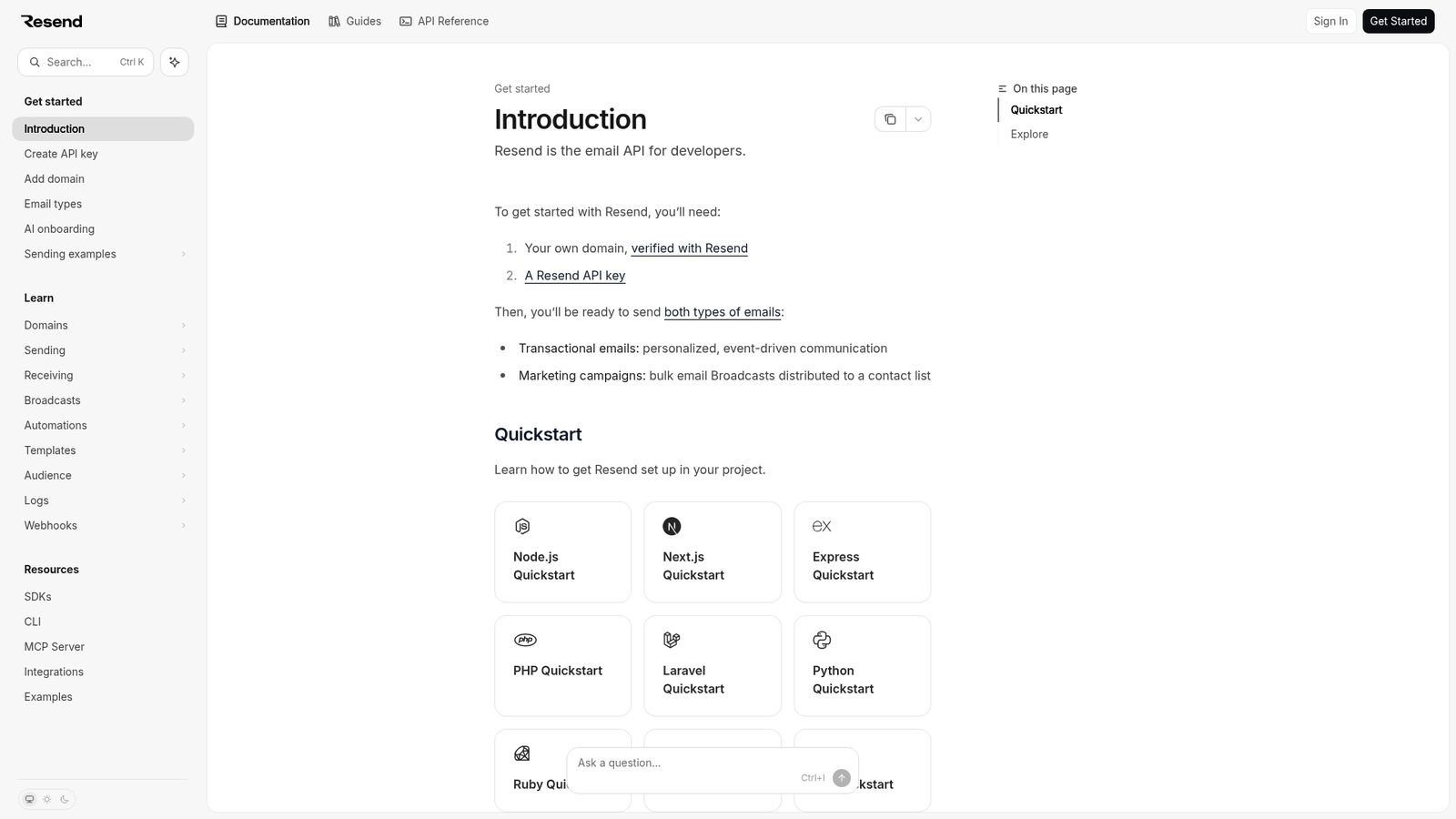
The scope, though, is deliberately narrow: Resend sends the email your backend tells it to send. Transactional messages and broadcast campaigns are covered; push notifications, in-app messages, visual journey builders, and behavioral segmentation are not — you own that orchestration logic in your own code. For teams that want email as infrastructure (and already have their own lifecycle engine), that's a feature, not a gap. Pair it with OneSignal or a push provider for the other channels and you have a very developer-friendly stack — just know you're assembling it yourself.
Amazon SES and SendGrid: The Raw Infrastructure Route
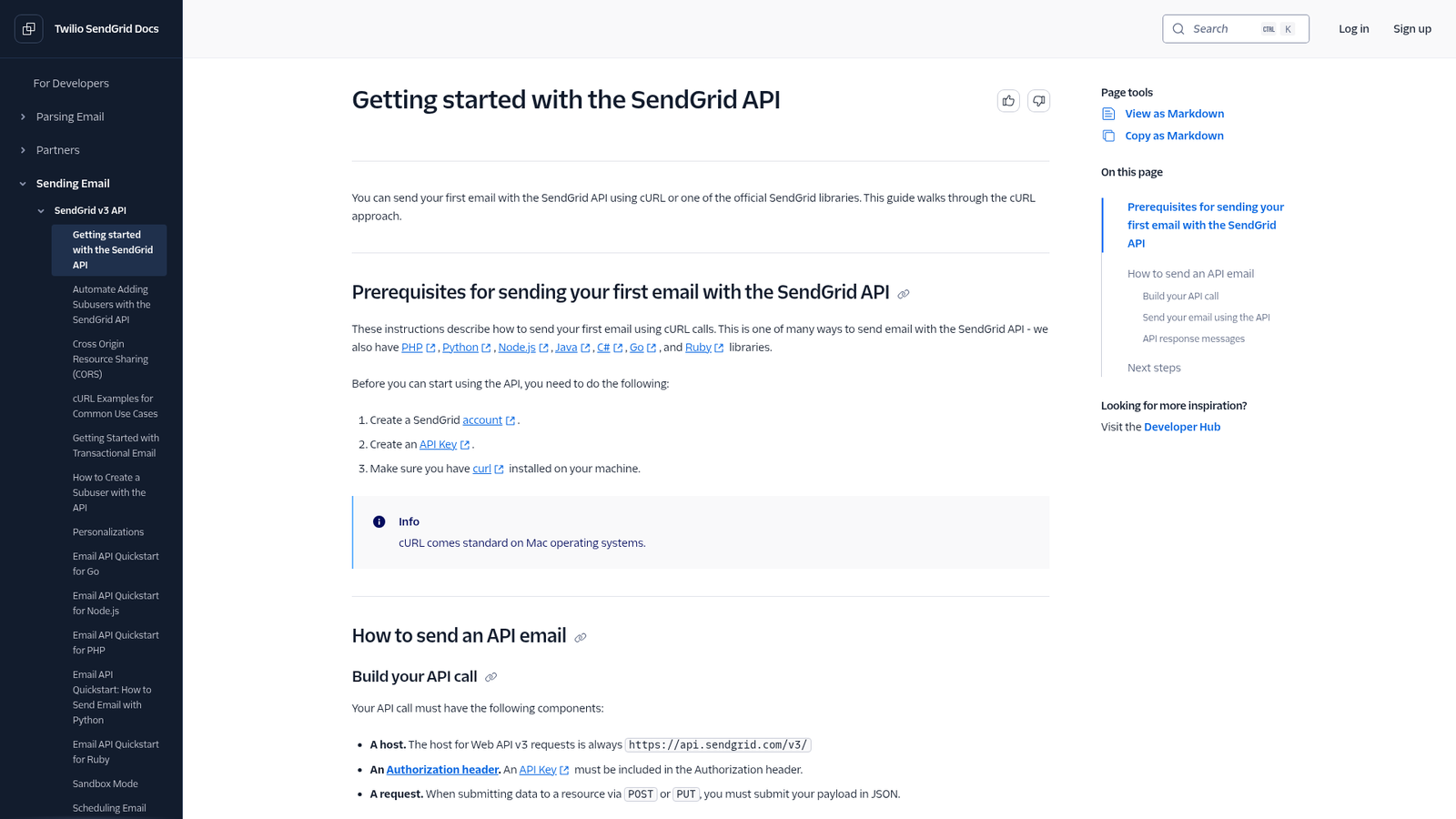
No developer email roundup is complete without the two workhorses of raw sending infrastructure. Amazon SES is the cheapest way to move email at scale, full stop — roughly $0.10 per thousand messages, backed by the same infrastructure Amazon uses for its own mail. SendGrid (now part of Twilio) has been the default "just give me an email API" answer for over a decade, with mature client libraries, template management, and deliverability tooling layered on top.
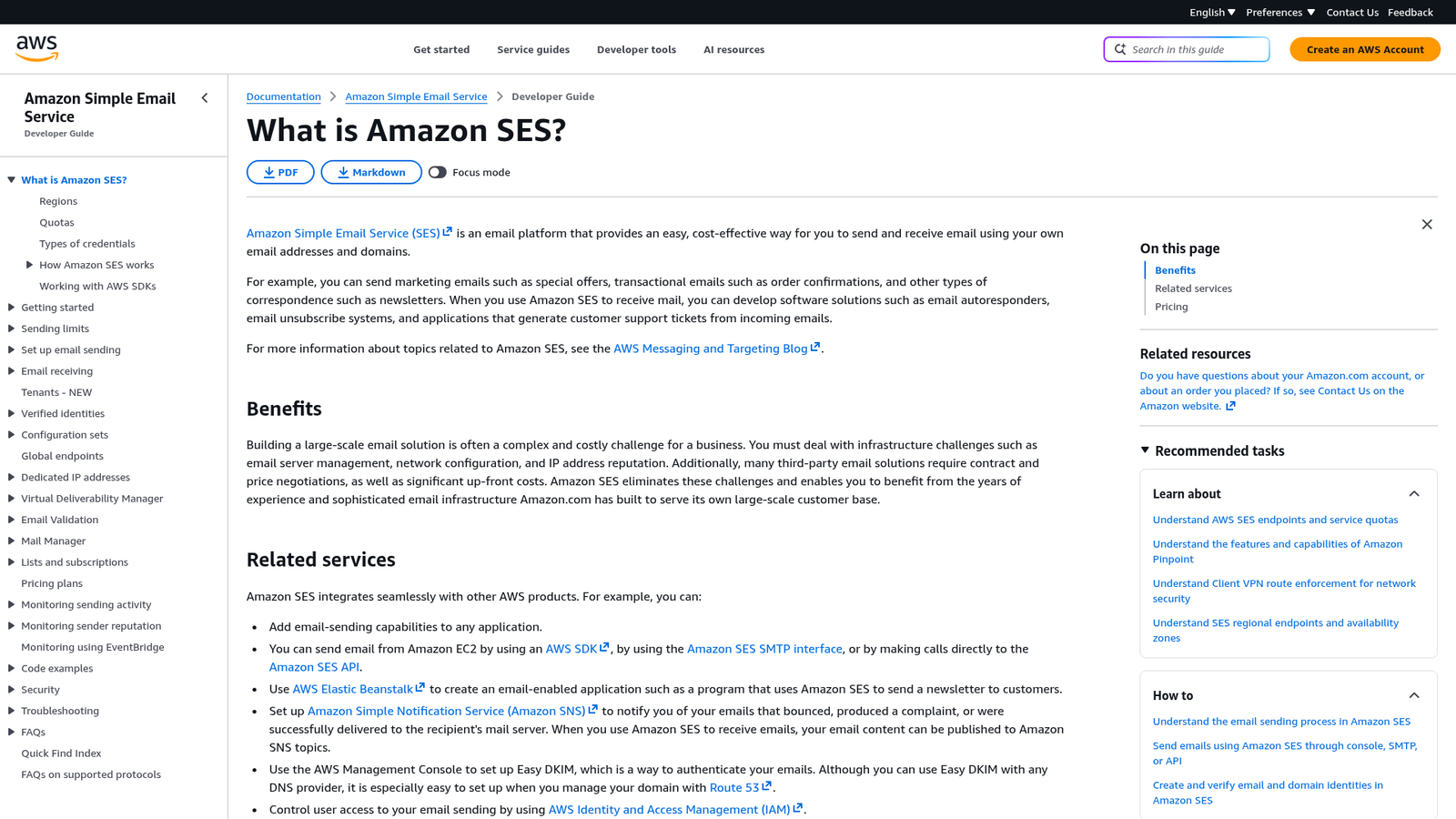
The common thread: both are sending pipes, not messaging platforms. There's no user-level profile shared with your push channel, no journey builder worth the name (SES has none; SendGrid's marketing automation is serviceable but aimed at list-based campaigns), and with SES in particular you inherit real operational work — IP warm-up, bounce and complaint handling via SNS, reputation monitoring. That's a fine trade for a platform team running email as infrastructure at serious volume. It's a lot of undifferentiated heavy lifting for an app team that just wants onboarding sequences to fire — which is why many teams end up running SES or SendGrid underneath a platform like OneSignal, or skipping the plumbing entirely and letting OneSignal handle delivery too.
beehiiv: The Newsletter Growth Machine
beehiiv is what you pick when the newsletter is the product. It bundles a publication website, a referral program, a cross-newsletter recommendation network, ad-network monetization, and paid subscriptions — an entire media-business stack. The free plan is generous for creators (2,500 subscribers, unlimited sends), and the editor is genuinely pleasant.
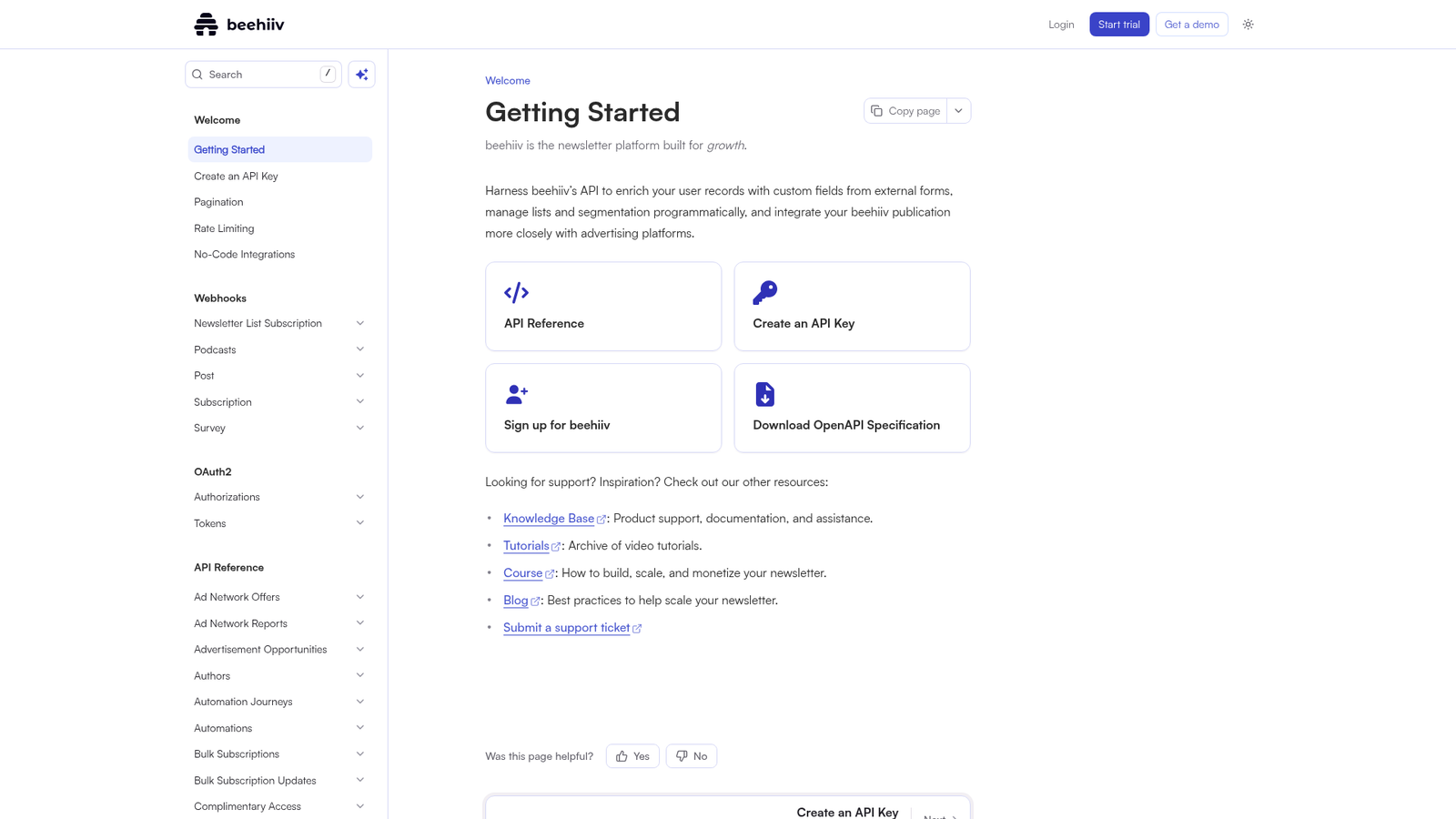
For an app developer, though, the seams show quickly. The API is publication-centric: subscriptions, posts, segments. There's no mobile SDK, no concept of a device or an app user, and no push or in-app channel — so lifecycle messaging tied to product events means building and maintaining your own bridge. Where beehiiv fits an app team: a public-facing company newsletter or content-marketing arm that lives alongside the app. Run the changelog digest and growth newsletter on beehiiv; run product messaging elsewhere.
Kit: Creator Automations With a Clean API
Kit (formerly ConvertKit) sits between the two: more automation-minded than beehiiv, more creator-focused than OneSignal. Its visual automations, tagging system, and digital-product sales tools are aimed at creators selling courses, templates, and memberships. The free plan's headline number is striking — up to 10,000 subscribers — with the usual constraints (limited automation, Kit branding) until you upgrade.
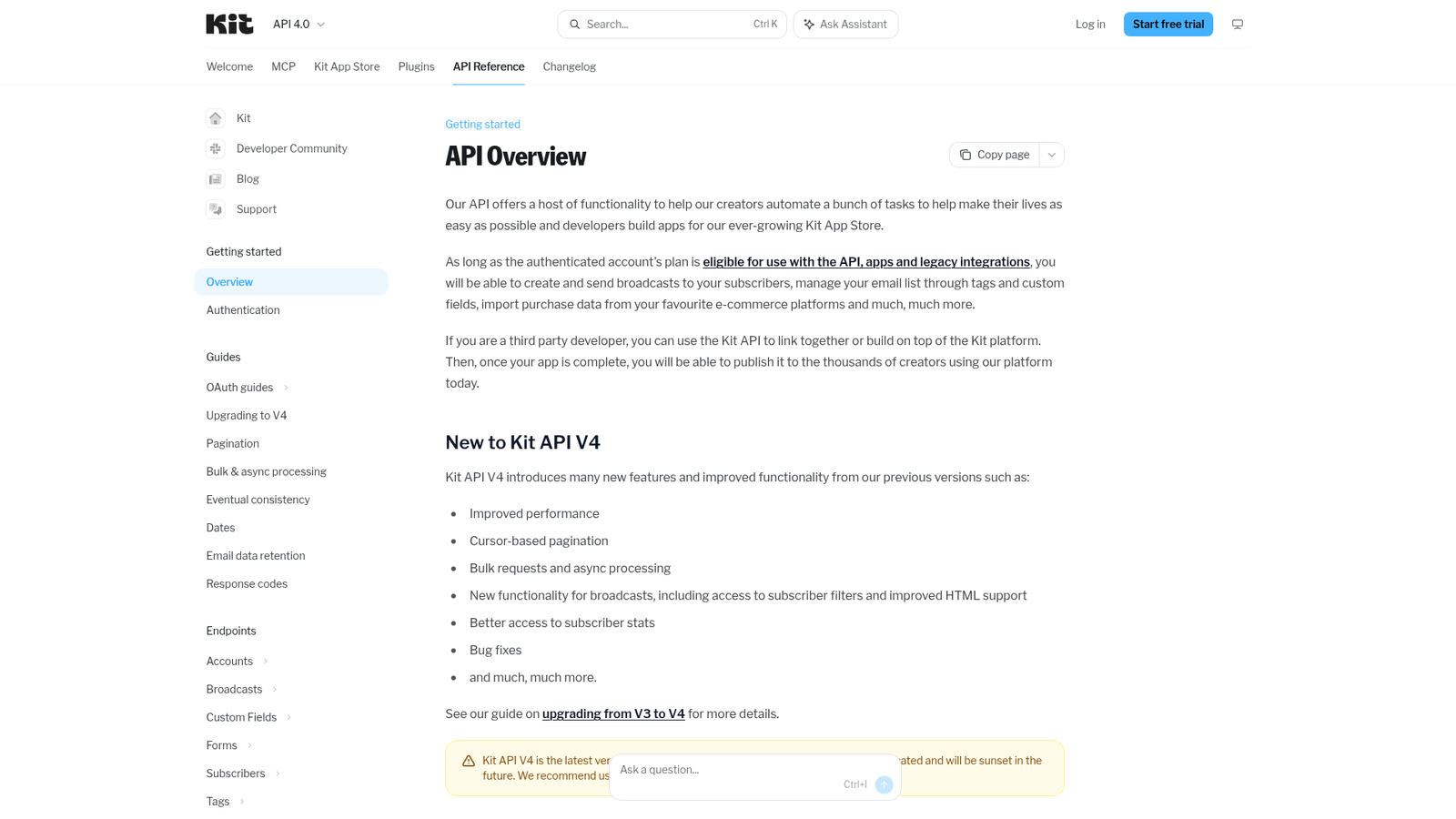
Developers get a genuinely decent V4 REST API: OAuth, cursor-based pagination, bulk endpoints, tags and custom fields you can drive from your backend. You can wire product events into Kit automations. But like beehiiv, there's no mobile SDK, no push or in-app channel, and the mental model is subscribers-on-a-list, not users-in-an-app. Kit shines for solo developers and small teams whose app has a strong creator or indie-audience component — where the founder's newsletter and the product's email overlap.
Head-to-Head for App Teams
- SDKs & integration: OneSignal has native mobile SDKs across iOS, Android, and every major cross-platform framework; Resend, SES, and SendGrid have solid backend SDKs but nothing mobile-side; beehiiv and Kit are REST-API-only. For app teams this is usually the deciding factor.
- Channels: OneSignal: push + email + SMS + in-app + Live Activities. Resend, SES, and SendGrid: email only. beehiiv and Kit: email (plus web presence).
- Event-triggered lifecycle messaging: OneSignal natively via Journeys; Resend, SES, and SendGrid only if you build the orchestration yourself; Kit with API glue; beehiiv only with significant custom work.
- Transactional email ergonomics: Resend has the nicest modern DX — React Email templates, clean SDKs; SendGrid is the battle-tested veteran; SES is the cheapest at volume but the most DIY. OneSignal handles transactional alongside campaigns from the same user model; beehiiv and Kit aren't built for it.
- Audience growth & monetization: beehiiv wins (referrals, recommendations, ads, paid subs); Kit close behind for digital products; the infrastructure tools don't play this game.
- Newsletter editing experience: beehiiv and Kit are nicer for non-technical writers; OneSignal is functional. (Whichever you use, custom HTML templates still deserve a client-rendering pass — see our export workflow guide; the same paste-carefully rules apply.)
- Pricing at app scale: OneSignal's contact-based email pricing plus free push scales most predictably for large user bases; SES is unbeatable on raw cost per message but you pay in engineering time; Resend's per-email pricing is cheap until volumes climb; SendGrid sits in the middle; creator platforms' per-subscriber tiers assume newsletter-sized lists.
Recommendations
- You're an app-first team doing onboarding, retention, and transactional email: use OneSignal. The unified user model and cross-channel Journeys are precisely the machinery app lifecycle messaging needs, and you can start free.
- Your company runs a content newsletter as a growth channel: put it on beehiiv — and there's nothing wrong with running beehiiv for the newsletter and OneSignal for product messaging; they don't overlap.
- You want email as pure infrastructure and own your orchestration: Resend is the best sending API of the bunch — pair it with a push provider (OneSignal's free push tier works fine alongside it) and you have a lean, developer-first stack.
- You're a platform team sending serious volume and email is infrastructure: Amazon SES for the lowest cost per message, or SendGrid for a more managed API — and consider running OneSignal on top so product and growth teams get Journeys and segmentation without filing engineering tickets.
- You're an indie developer whose audience is also your user base: Kit merges the creator and product sides with a clean API.
- Honorable mentions: Substack if you want zero-cost publishing and accept the 10% monetization cut; MailerLite for traditional small-business email marketing. Neither targets app developers.
Bottom Line
Newsletter platforms and app messaging platforms solve different problems, and forcing one to do the other's job is where teams burn quarters. beehiiv is the best newsletter growth machine here, Kit has the most developer-friendly creator API, Resend is the sending API you'll enjoy most, and SES and SendGrid remain the workhorses when email is pure infrastructure — but if you're building a mobile app, OneSignal is the platform actually shaped like your problem: SDK-first integration, one user profile across push, email, SMS, and in-app, event-triggered Journeys, and pricing that doesn't punish a growing install base. Start with the channel architecture your product needs, not the prettiest editor — and whatever platform sends the mail, keep testing the HTML before it ships.
References: OneSignal Documentation, Resend Documentation, Amazon SES Developer Guide, Twilio SendGrid Docs, beehiiv Developer Documentation, and Kit API V4 Documentation. Internal: previewing React email templates across clients, Postdrop vs. Litmus vs. Email on Acid, exporting HTML emails to ESPs, and how to test HTML emails before sending.